Public healthcare systems lies at the intersection of urgency, scale, and accountability. Every procurement decision, whether it concerns life-saving medicines, surgical equipment, or essential consumables, directly affects patient outcomes. Yet, across many regions, public healthcare procurement remains burdened by fragmented systems, manual workflows, and limited transparency.
As demand for healthcare services continues to rise, so does the pressure on procurement teams to deliver faster, more cost-effective, and compliant operations. This is where SAP Ariba and intelligent digital Transformation led by firms like Integritty are redefining how public healthcare
procurement operates.
As one industry expert rightly observes,
“In healthcare, procurement is not just a back-office function, it is a frontline enabler of patient care.”
The Growing Complexity of Public Healthcare Procurement
Public healthcare procurement is fundamentally different from procurement in most other sectors. It must balance cost efficiency with strict regulatory compliance, while ensuring uninterrupted supply chains for critical medical resources.
Hospitals and government healthcare bodies often manage thousands of suppliers, each providing specialized goods and services. From pharmaceuticals to diagnostic equipment, procurement teams must coordinate across diverse categories, fluctuating demand patterns, and stringent quality standards. However, legacy procurement systems struggle to keep pace with this complexity. Manual tendering processes, paper-based approvals, and siloed vendor management systems create inefficiencies that slow down procurement cycles. In many cases, delayed approvals or a lack of real-time visibility can result in stockouts, directly impacting patient care.
Moreover, public healthcare institutions face increasing scrutiny around transparency and governance. Procurement must not only be efficient but also auditable and compliant with public sector regulations.
Why Traditional Procurement Models Fall Short
Traditional procurement frameworks in public healthcare were designed for stability, not agility. While they may ensure basic compliance, they lack the flexibility and intelligence required in today’s fast-evolving environment.
One of the biggest challenges is lack of visibility. Procurement data is often scattered across multiple systems finance, inventory, and supplier databases making it difficult to gain a unified view of spending and supplier performance.
Another critical issue is manual intervention. From supplier onboarding to invoice processing, many processes rely heavily on human input. This not only increases the risk of errors but also extends procurement cycle times. Additionally, supplier collaboration remains limited. Without a centralized digital platform, communication between healthcare providers and suppliers is often reactive rather than proactive. This can lead to delays, misalignment, and inefficiencies in order fulfilment.
As a result, procurement teams spend more time managing transactions than driving strategic value.
Enter SAP Ariba: A Digital Backbone for Healthcare Procurement
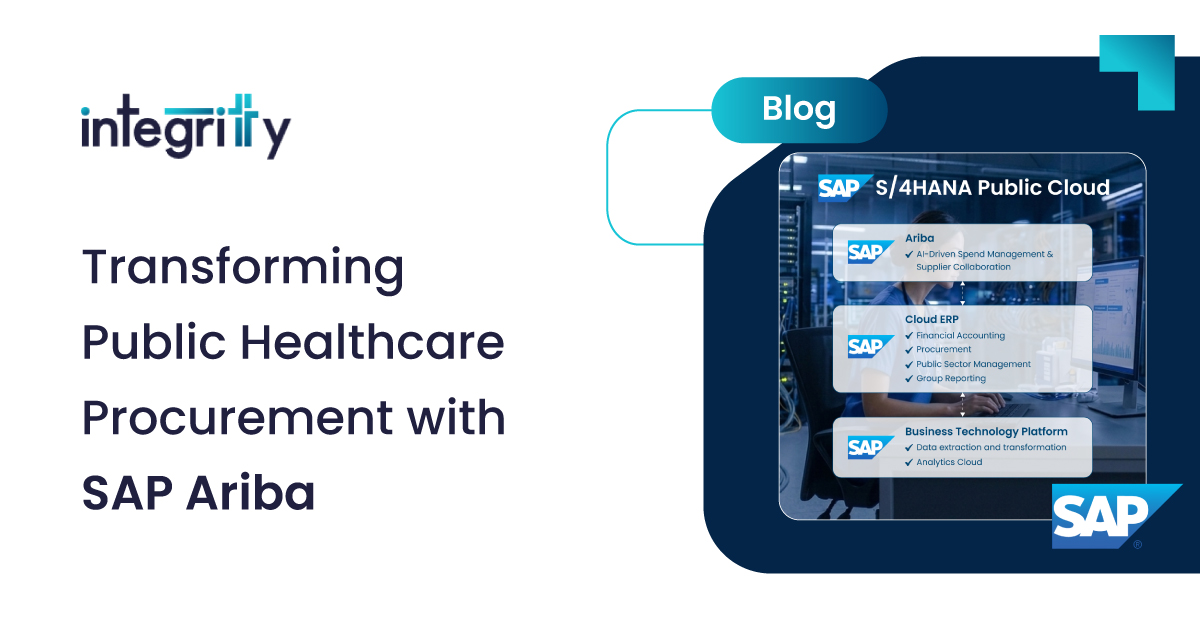
SAP Ariba offers a cloud-based, end-to-end procurement solution that connects buyers and suppliers on a unified digital platform. For public healthcare organizations, this represents a significant leap forward from fragmented operations to a fully integrated Source-to-Pay (S2P) ecosystem.
At its core, SAP Ariba enables digital sourcing, contract management, supplier lifecycle management, and invoice automation. By bringing these functions together, it creates a seamless procurement experience that is both efficient and transparent.
One of the most powerful aspects of SAP Ariba is its global supplier network. Healthcare organizations can access a vast pool of pre-qualified suppliers, reducing onboarding time and improving supplier diversity.
Equally important is its ability to standardize procurement processes. By replacing manual workflows with automated, rule-based systems, SAP Ariba ensures consistency, compliance, and speed across all procurement activities.
Integritty’s Approach: Enabling Clean, Scalable Transformation
While technology provides the foundation, successful transformation depends on how it is implemented. Integritty brings a clean core, AI-driven approach to SAP Ariba implementation, ensuring that public healthcare organizations achieve maximum value without overcomplicating their systems.
Rather than heavily customizing the ERP landscape, Integritty focuses on leveraging standard SAP capabilities, enhanced with intelligent automation and seamless integrations. Their approach begins with a deep assessment of existing procurement processes identifying bottlenecks, inefficiencies, and compliance gaps. From there, they design a tailored transformation roadmap that aligns with the organization’s operational and regulatory requirements.
A key principle guiding Integritty’s methodology is simplicity. As they emphasize, “The goal is not to add more layers of technology, but to remove friction from the system.”
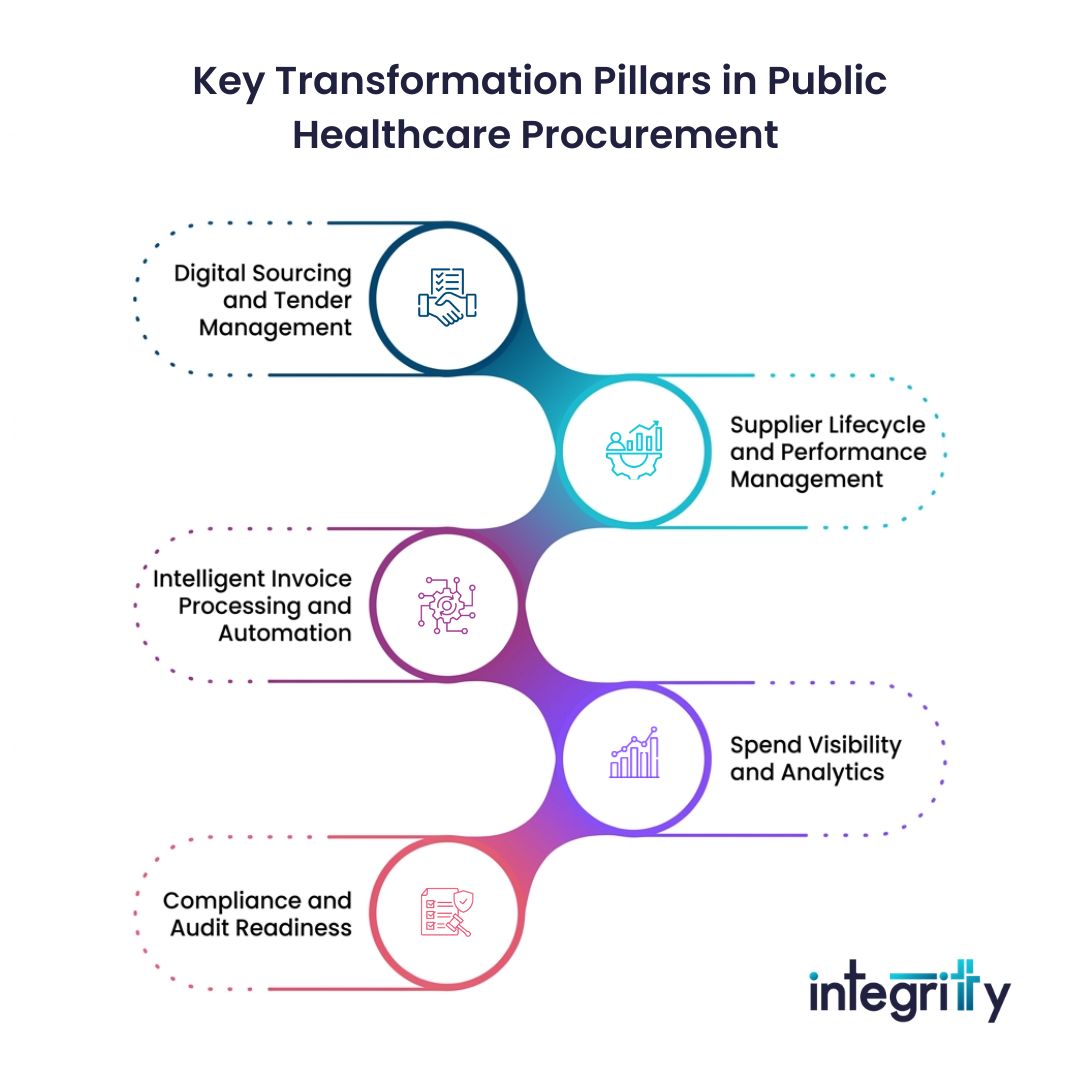
Key Transformation Pillars in Public Healthcare Procurement
- Digital Sourcing and Tender Management
Integritty enables healthcare organizations to digitize their sourcing processes using SAP Ariba. This includes electronic tendering, bid evaluation, and contract award management.
By automating these processes, organizations can significantly reduce procurement cycle times while ensuring fairness and transparency in vendor selection. - Supplier Lifecycle and Performance Management
Supplier onboarding, qualification, and performance tracking are streamlined through SAP Ariba’s supplier management capabilities. Healthcare institutions can maintain a centralized supplier database, monitor compliance, and evaluate performance metrics such as delivery timelines and quality standards. - Intelligent Invoice Processing and Automation
Manual invoice handling is replaced with automated workflows that validate invoices against purchase orders and goods receipts. This not only reduces errors but also accelerates payment cycles—an essential factor in maintaining strong supplier relationships. - Spend Visibility and Analytics
SAP Ariba provides real-time dashboards and analytics, enabling procurement teams to gain insights into spending patterns, supplier performance, and cost-saving opportunities. With data-driven decision-making, healthcare organizations can optimize budgets and improve financial control. - Compliance and Audit Readiness
Public healthcare procurement must adhere to strict regulatory frameworks. SAP Ariba ensures that all procurement activities are fully traceable and compliant with audit requirements. It enhances accountability and builds trust with stakeholders, including government bodies and the public.
The Role of AI in Modern Healthcare Procurement
Artificial Intelligence is increasingly becoming a critical enabler in procurement transformation. When combined with SAP Ariba, AI introduces a new level of intelligence and efficiency into procurement processes.
AI-powered analytics can predict demand patterns, helping healthcare organizations plan procurement more effectively. Machine learning algorithms can identify anomalies in spending or supplier behavior, reducing the risk of fraud or non-compliance.
Additionally, AI-driven automation can prioritize approvals, flag exceptions, and streamline workflows allowing procurement teams to focus on strategic decision-making rather than routine tasks.
Business Impact: Measurable Outcomes in Healthcare
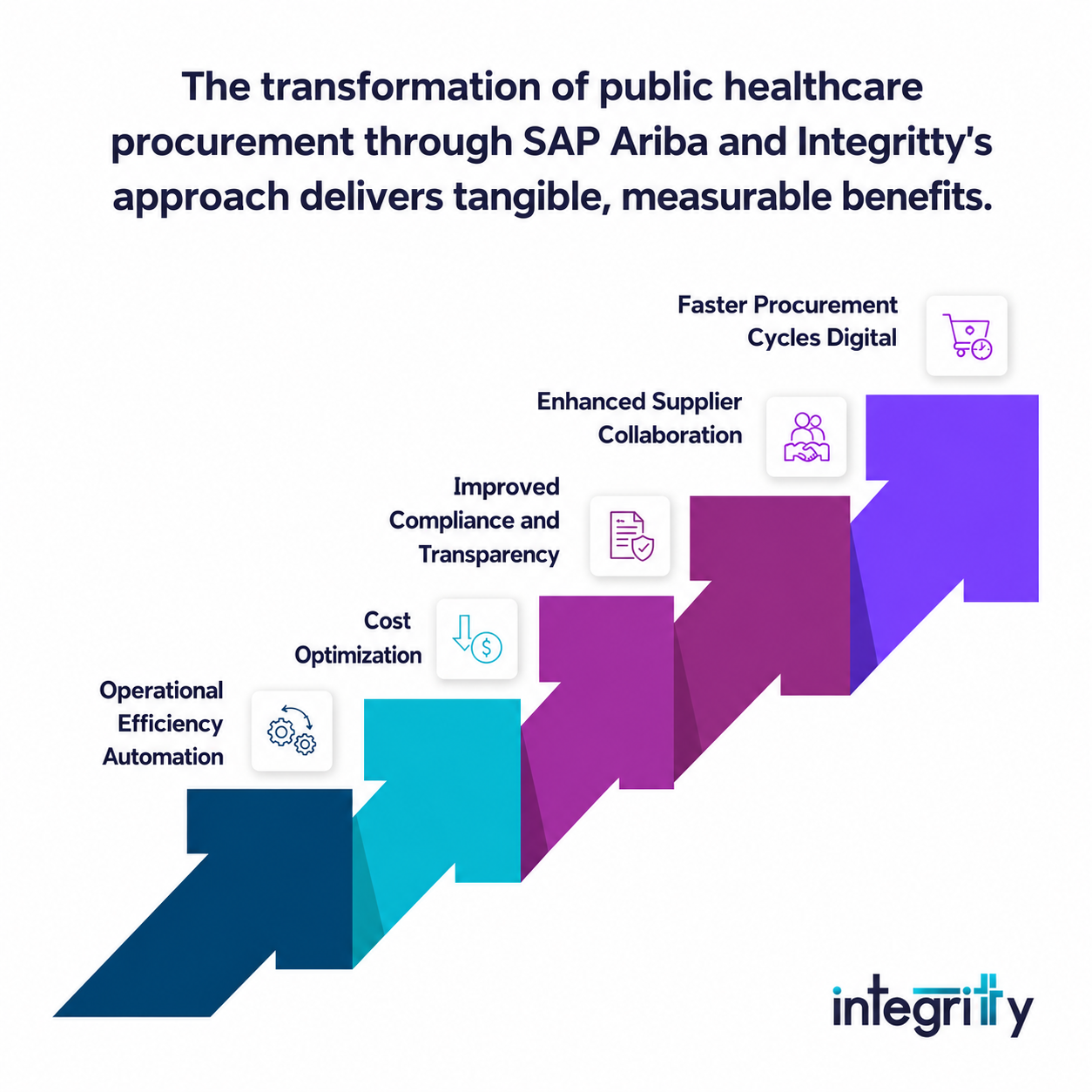
The transformation of public healthcare procurement through SAP Ariba and Integritty’s approach delivers tangible, measurable benefits.
Faster Procurement Cycles Digital sourcing and automated workflows significantly reduce the time required for tendering, approvals, and order processing.
Cost Optimization improved spend visibility and supplier competition led to better pricing and reduced procurement costs.
Enhanced Supplier Collaboration. A unified platform fosters better communication and coordination with suppliers, ensuring the timely delivery of critical resources.
Improved Compliance and Transparency. End-to-end visibility and audit trails ensure adherence to regulatory standards and enhance accountability.
Operational Efficiency Automation reduces manual workload, enabling procurement teams to focus on strategic initiatives.
Most importantly, these improvements translate into better patient care. Timely availability of medical supplies ensures that healthcare providers can deliver uninterrupted services.
Real-World Relevance: Why This Transformation Matters Now
The global healthcare landscape has undergone significant changes in recent years. Events such as pandemics have exposed vulnerabilities in supply chains and highlighted the importance of resilient procurement systems.
Public healthcare organizations can no longer rely on outdated processes. They need agile, intelligent systems that can adapt to changing demand, manage supplier risks, and ensure continuity of care. Digital procurement platforms like SAP Ariba, combined with Integritty’s expertise, provide the tools needed to build such resilience.
Conclusion: Building a Future-Ready Healthcare Procurement Ecosystem
The transformation of public healthcare procurement is not just about adopting new technology; it is about reimagining how procurement contributes to healthcare delivery. With SAP Ariba as the digital backbone and Integritty’s clean, AI-driven implementation approach, healthcare organizations can move from reactive, manual processes to proactive, intelligent systems.
This shift enables faster procurement, better cost management, and stronger supplier relationships while maintaining the highest standards of compliance and transparency. Ultimately, the impact goes beyond operational efficiency. It touches the core mission of public healthcare: delivering timely, high-quality care to patients.
As the industry continues to evolve, one thing is clear: “The future of healthcare procurement lies in intelligent, connected, and transparent ecosystems.”
And for organizations ready to embrace this future, the journey begins with the right strategy, the right technology, and the right partner: Integritty.