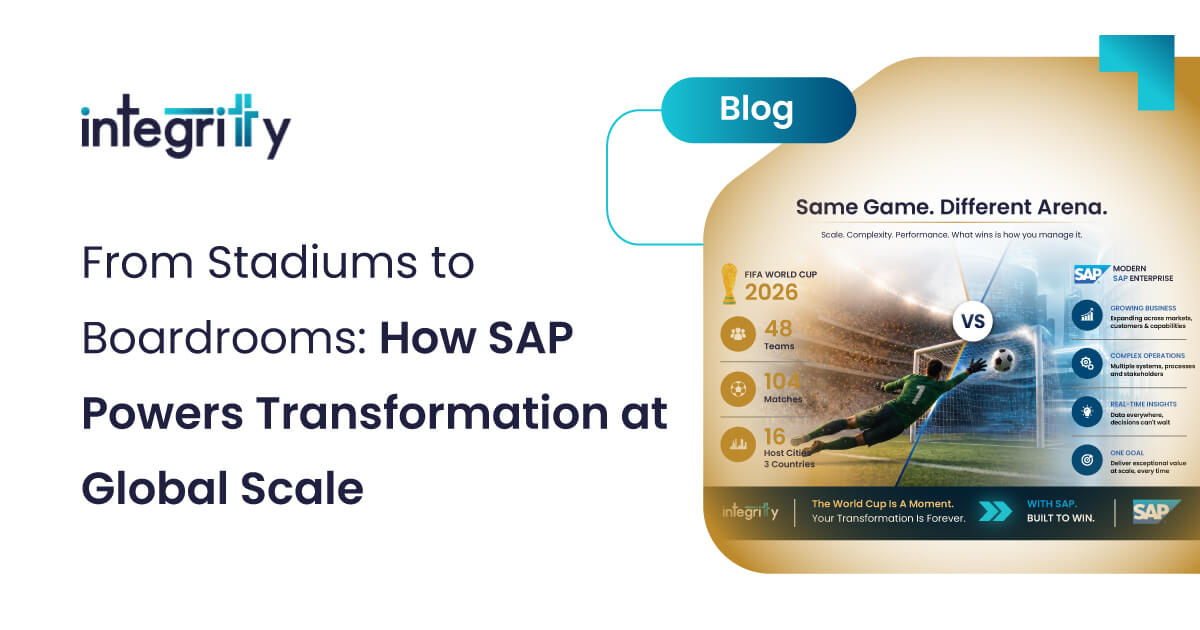
The FIFA World Cup 2026 is already shaping up to be unlike anything we’ve seen before.
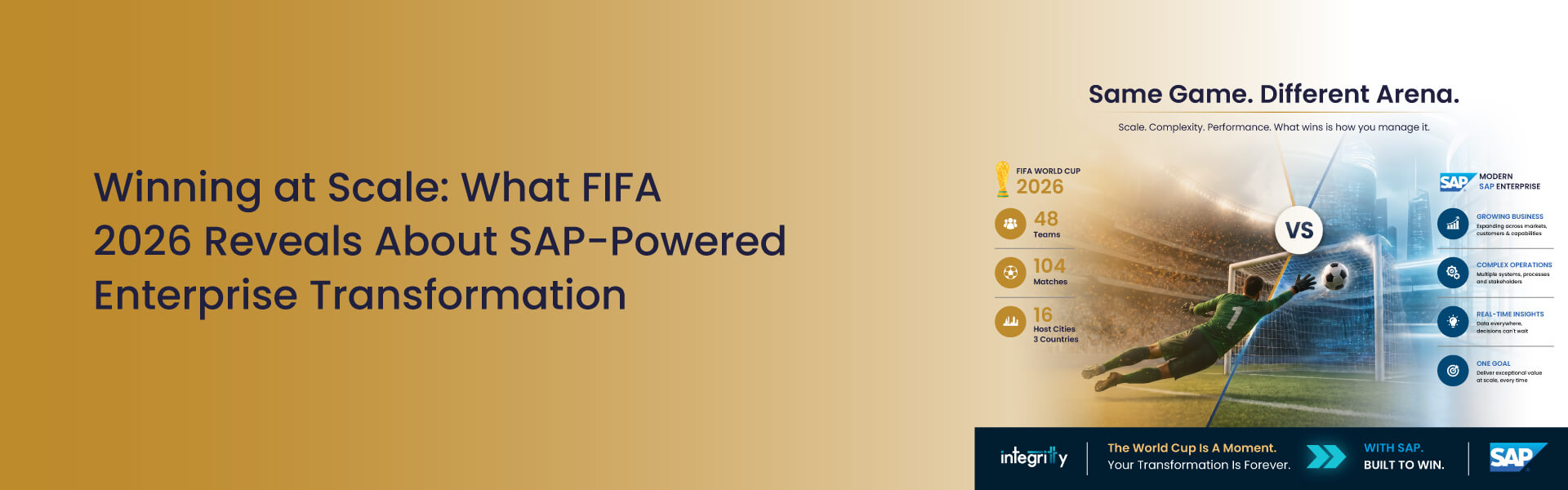
Forty-eight teams. 104 matches. 16 host cities. Three countries sharing one global stage.
Behind the excitement, there’s an enormous coordination challenge. Moving players, teams, fans, broadcasters, security, transport, and schedules across borders in real time requires incredible orchestration. Different languages, regulations, time zones, and systems all must work together flawlessly. And here is the reality: at this scale, even a small breakdown doesn’t stay small. One issue can quickly create waves of chaos across the entire system.
Sounds familiar, doesn’t it?
Enterprise complexity looks the same—just without the stadium lights
Enterprise business doesn’t normally manage football tournaments, but they do manage complexity.
Finance, supply chain, procurement, sales, operations, compliance, partners, customers, employees—all need to stay aligned while the business keeps moving. And the more a company grows and achieves new levels of success, the harder this becomes.
New markets open. New systems are added. Acquisitions bring in more tools and processes. Regulations differ from region to region.
Growth turns into complexity, and without the right foundation, that complexity starts to slow everything down. Scale only works when every moving part is connected by design.
Enter: a modern, SAP-powered transformation with SAP S/4HANA Cloud , that helps enterprise organizations build a connected digital core that keeps everything aligned as they scale.
When legacy systems start holding growth back
Most growing companies run into the same problems sooner or later:
- A new business unit launches, and suddenly the numbers don’t match.
- An acquisition closes, and now there are two versions of the finance truth.
- A new geography opens, and reporting becomes a manual effort stitched together in spreadsheets.
The issue usually isn’t effort—it’s architecture.
Legacy ERP systems were built for a different time. They’re often fragmented, heavily customized, and difficult to change. They worked well when businesses were simpler. But they struggle when speed, visibility, and adaptability matter most.
And this becomes more than an IT problem. It becomes a new business constraint. When teams spend more time reconciling data than acting on it, decision-making slows down, risk increases, and leaders end up steering the business with incomplete or outdated information.
At this point, scaling feels less like progress and more like friction.
SAP S/4HANA Cloud: your enterprise midfield
Think about a football match: the midfield is where everything connects. It links defense and attack, controls the pace, distributes the ball, and keeps the team synchronized. When it works, the game flows. When it doesn’t, everything falls apart.
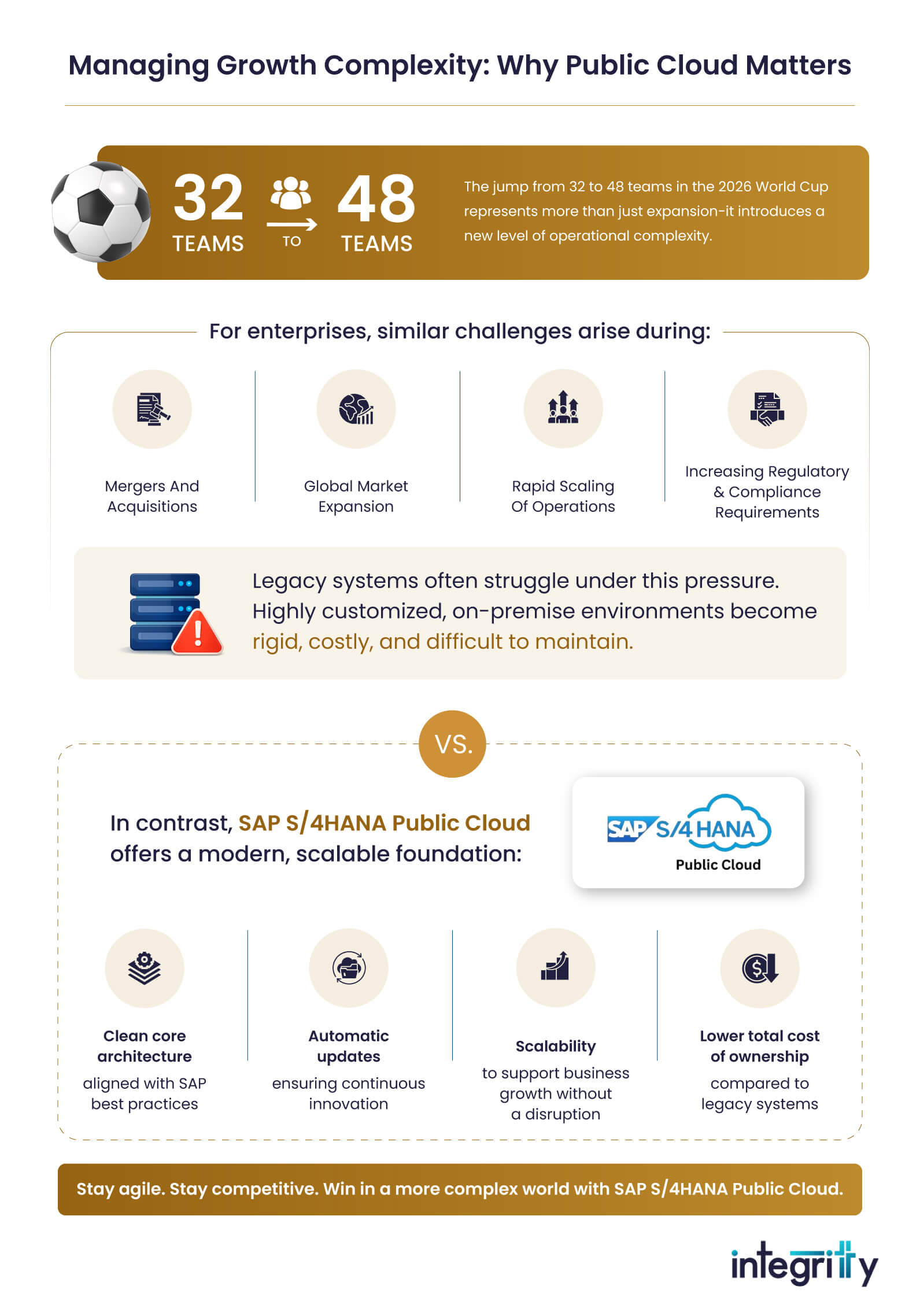
A modern ERP plays a similar role inside a business. SAP S/4HANA Cloud acts as that digital core—connecting finance, procurement, supply chain, manufacturing, sales, and operations into a single, unified system. Instead of scattered data and disconnected teams, everyone works from one version of reality.
The impact shows up quickly: faster closes, better forecasting, cleaner compliance, and stronger cross-functional alignment.
But the bigger shift is strategic. With a clean, connected core, businesses don’t have to rebuild their foundation every time they grow. They can expand, acquire, and adapt without starting over.
SAP Analytics Cloud: the best seat to watch today’s game
Most reporting systems are good at one thing: explaining what already happened. They tell you last month’s results, last quarter’s performance, and historical trends. Useful—but always late. By the time you act on them, the moment has usually passed.
That’s where SAP Analytics Cloud changes the experience.
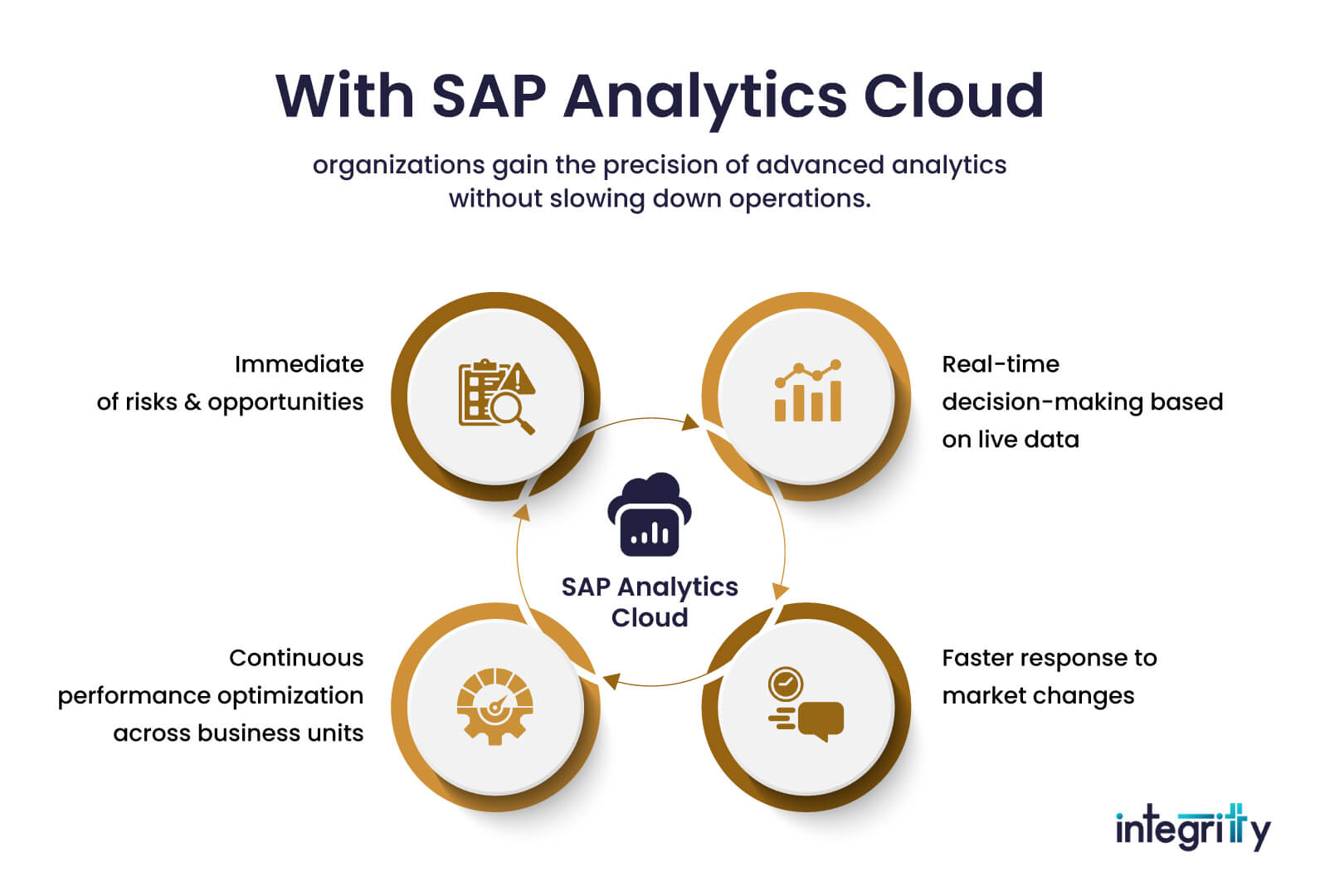
Instead of static reports, leaders get live visibility into what’s happening right now—and what is likely to happen next: supply chain disruptions can be flagged early, financial forecasts adjust as conditions change, and demand shifts become visible before they turn into inventory problems. This isn’t just better reporting; it’s better timing, and timing is often the difference between reacting and leading.
How the Cloud has changed the game
As businesses grow, it isn’t about what systems are used—it’s how easily those systems can evolve.
SAP S/4HANA Cloud is built for that kind of change.
- Clean Core Architecture. By aligning processes to SAP best practices and reducing unnecessary customization, companies avoid building up technical debt that slows future change.
- Continuous improvement instead of big upgrades. Instead of disruptive upgrade projects every few years, updates and innovations arrive continuously in the cloud. That means less disruption and more steady progress.
- Lower total cost, higher focus. With less infrastructure to manage and fewer heavy customizations, teams spend less time maintaining systems and more time improving the business itself.
Individually, these are IT benefits. But together, they become business advantages: faster decisions, better governance, and greater agility when conditions change.
Technology alone doesn’t transform anything.
Even the best system won’t deliver value on its own. Transformation only works when people, processes, data, and technology come together.
That means rethinking how work gets done—not just automating old workflows. It means using real-time data to improve daily decisions, not just quarterly reviews. And it means applying automation where it actually removes friction, not where it adds complexity.
An SAP Business Technology Platform is the tactical layer that connects the full system, extends what the core can do, and enables innovation without disrupting the game plan. SAP S/4HANA Cloud, SAP Analytics Cloud, and SAP BTP working together is more than software; it’s an adaptable operating model.
Put Me in Coach! How Integritty Helps You Get There
Choosing the right platform is only the starting point.
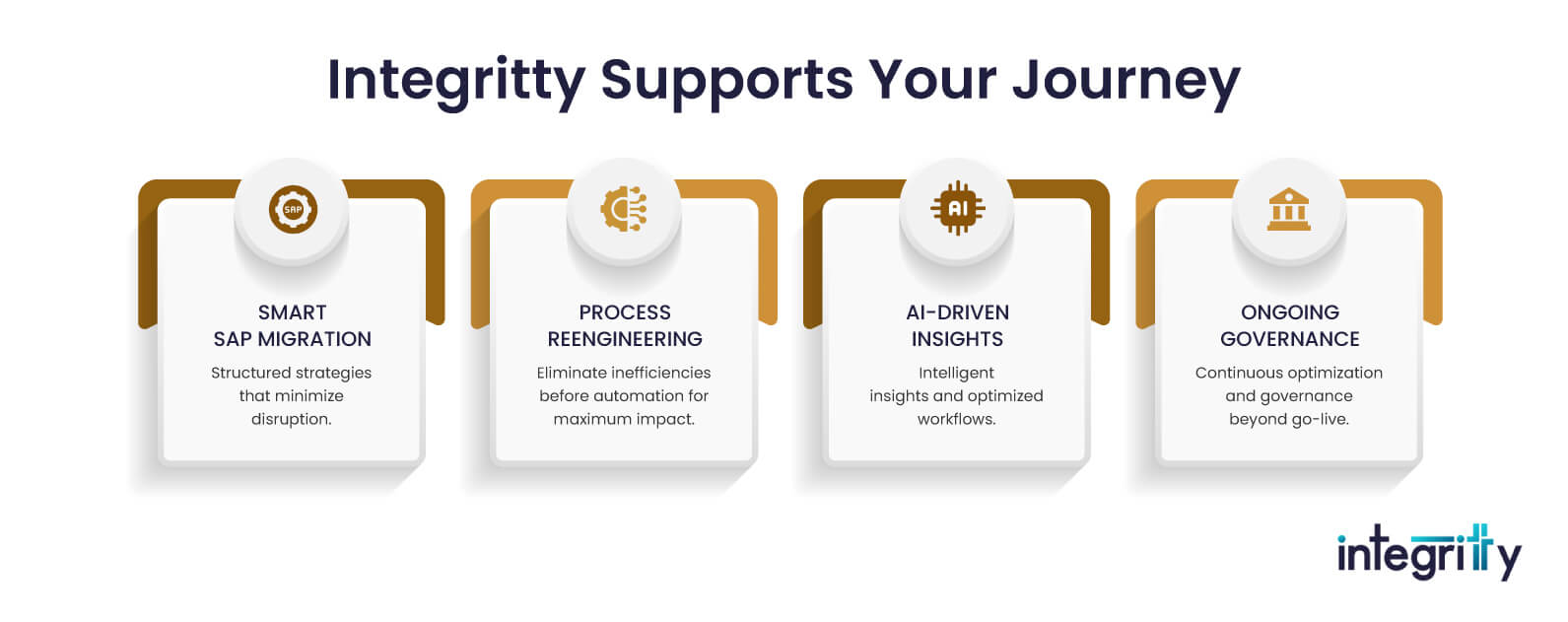
The real challenge lies in everything that comes after—design, migration, adoption, and change management are where transformation succeeds or stalls.
At Integritty, our focus is on aligning SAP transformation with actual business outcomes—not just technical implementation. Before anything is built or automated, we look closely at how work is currently done, where friction exists, and what needs to change to support the future.
Then we help organizations move step by step—planning migrations, reducing disruption, strengthening governance, and ensuring teams adopt these new ways of working, because go-live isn’t the finish line: it’s just the beginning of whether the system delivers real value in practice.
Build a Stronger Foundation for What Comes Next
The FIFA World Cup 2026 is a reminder of what’s possible when coordination, technology, and execution come together at scale. Most enterprises may not be running global tournaments—but they are dealing with their own version of complexity every day.
The companies that will lead in the next decade are already making different choices today:
- They’re replacing disconnected systems with connected platforms.
- They’re moving from delayed reporting to real-time insight.
- They’re building digital cores that can scale without breaking.
- They’re designing businesses that stay agile even as they grow.
Others, still running on legacy systems, will keep paying the price in slower decisions, higher maintenance, and limited visibility.
If your systems are slowing down your growth, it may be time to modernize your SAP foundation.
Integritty helps businesses modernize SAP environments so they can scale with confidence.
Let’s Talk Transformation