Overview
Modern enterprises operate in increasingly complex environments. Large-scale operations, distributed teams, and strict compliance requirements demand faster and more reliable incident response systems.
This is especially true for transportation and rail operators, where even small delays can impact safety, service continuity, and regulatory compliance.
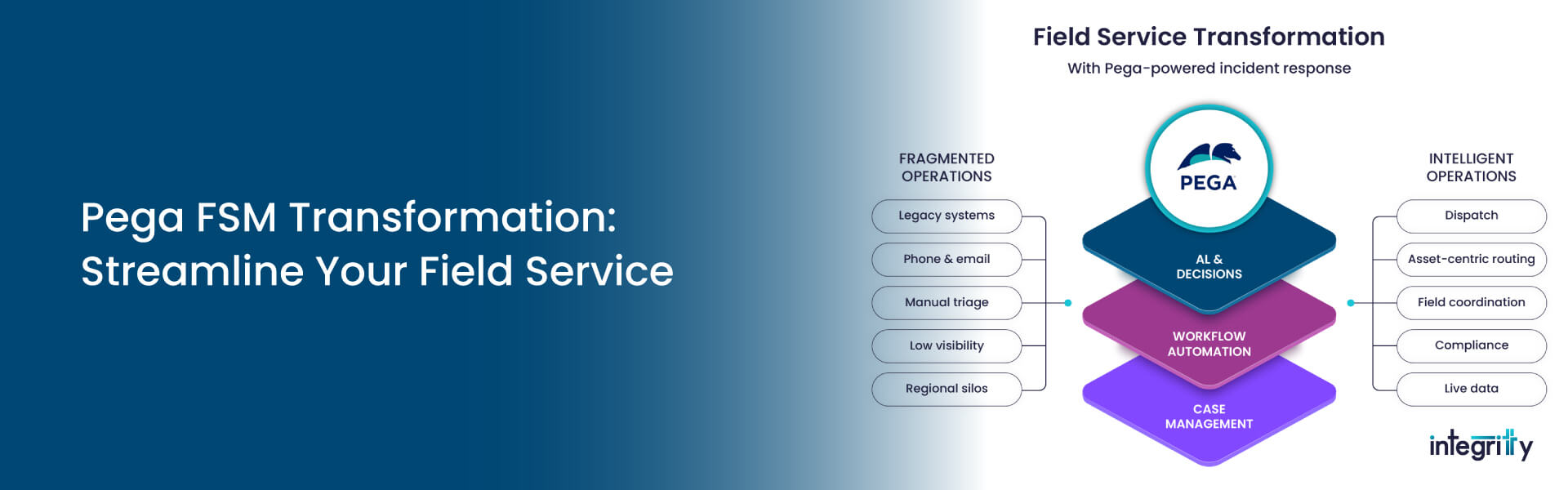
Our customer, a leading North American rail organization, faced this exact challenge. Their incident response and field service operations were fragmented across multiple systems, regions, and teams.
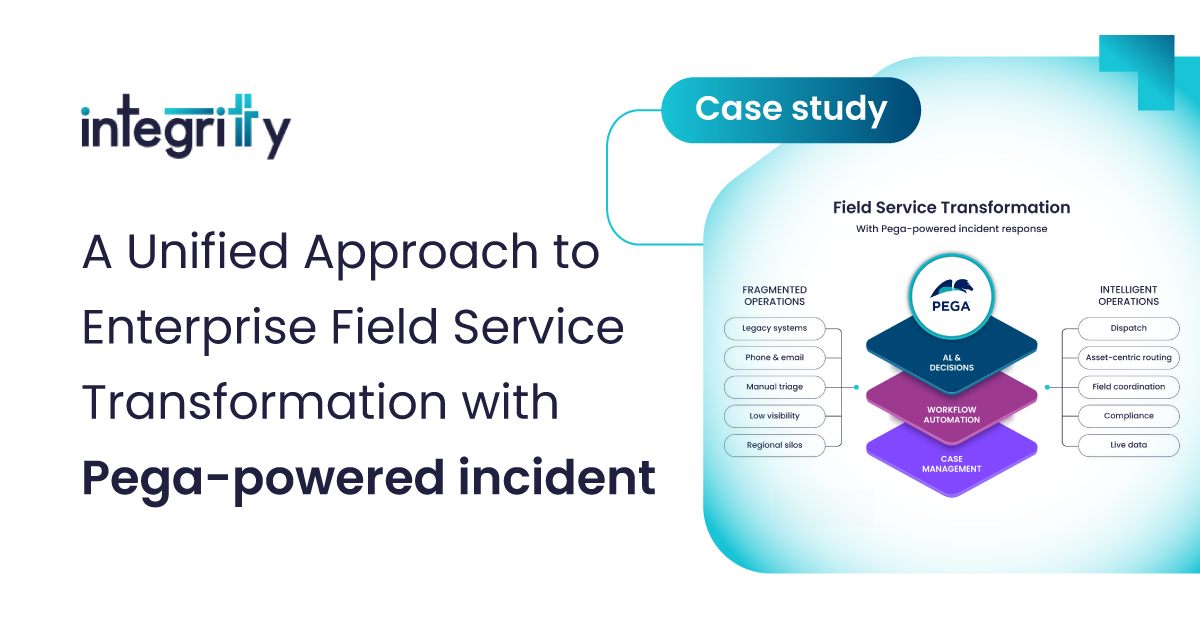
Integritty, as a trusted Pega partner, implemented a unified, intelligent incident management platform using the Pega FSM and Case Management framework.
The Business Challenge
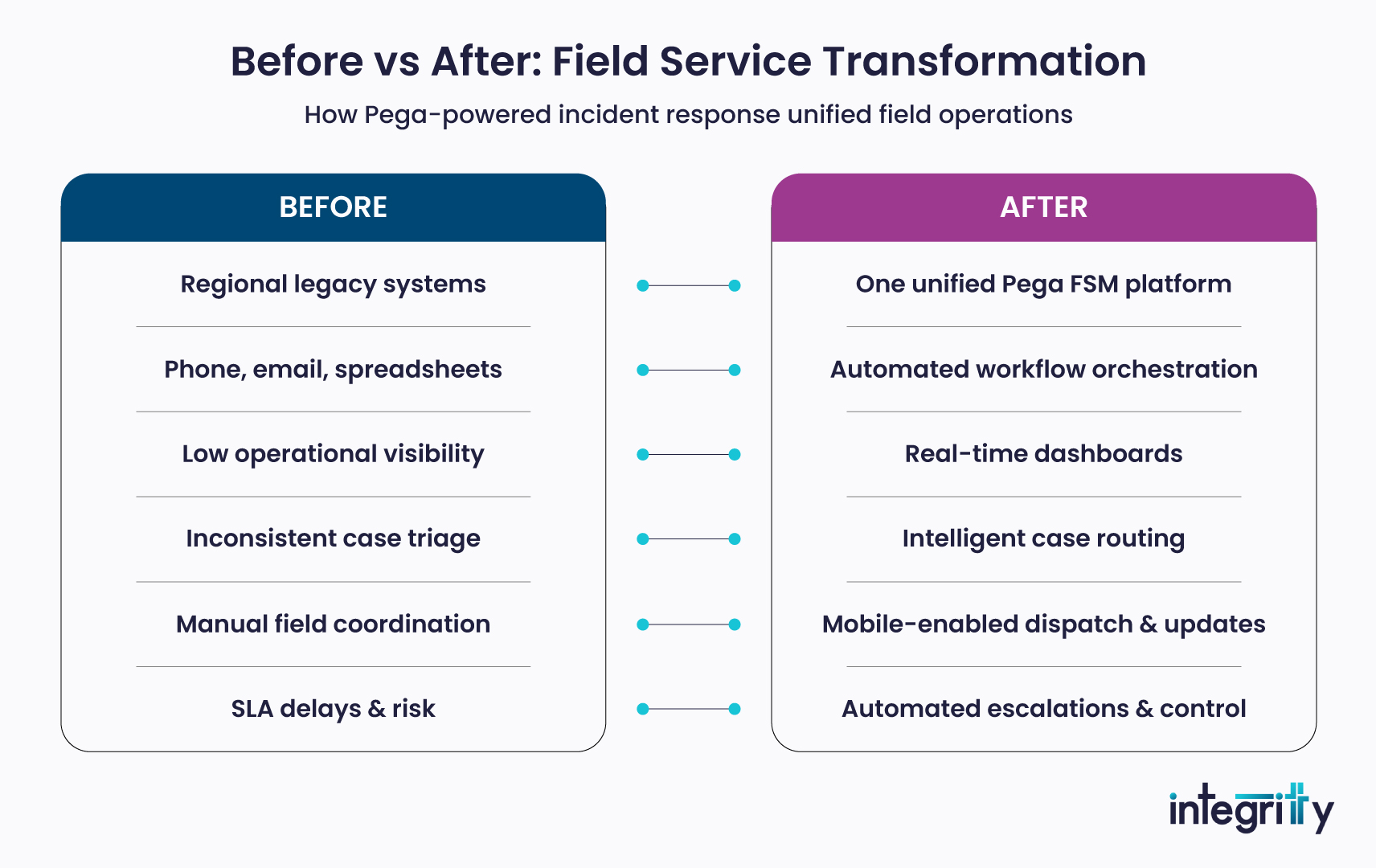
The organization was operating with regionally implemented, disparate systems, which resulted in the following operational issues:
- Disconnected Operations: Regions used different tools to manage incidents. This led to inconsistent workflows and data silos in the enterprise case management systems.
- Manual Operations: There was an over-reliance on phone calls, emails, and spreadsheets, instead of utilizing structured business process automation, to manage incidents and to deploy field staff.
- Low Visibility: A unified view of incidents across assets, locations, and teams was not available. This limited the organization’s ability to achieve operational intelligence and to make informed
decisions. - Inefficient Ticket Management: Free-text inputs, inconsistent templates, and manual management of hundreds of service requests reduced reporting accuracy, slowed decision-making, and increased operational pressure.
- Operational Challenges: Inefficient case management created delays in managing incidents, which resulted in uncontrolled risks and poor SLAs.
Approach
Integritty partnered with the railway, applying a consultative, design-led approach to ensure the proposed solution aligned with real-world operational needs:
1. Design Thinking Workshops
Integritty held cross-functional workshops with operations, field engineering, and service desk teams. The workshops allowed Integritty to:
- Understand operational workflows.
- Identify operational issues.
- Establish primary use cases.
2. Redesign, Don’t Reproduce
Where previous operational workflows were inefficient, Integritty redesigned workflows to eliminate those inefficiencies, using principles of BPM (Business Process Management), which included:
- Consistent workflows that were the same across all business regions.
- Efficient workflows incorporating rules-based decisioning.
3. Behavioural Design
Integritty incorporated case routing based on the customer support service agent and field support staff behaviours into the design of the solution, enabling:
- Customer service agents to manage a high volume of tickets.
- Field support staff to update task details on a mobile interface in real- time.
- Managers with access to real-time operational dashboards.
4. Flexible Design
Integritty built its solution on Pega FSM, which allowed Integritty to quickly and reliably design the solution to support business operations through:
- Reusable design patterns to support operations across multiple regions.
- Flexible configuration of systems and business operations.
- Integration with enterprise systems and downstream operational platforms.
Solution
Integritty created an end-to-end Pega-based incident and field service management platform that integrates operational functions and provides intelligent workflow automation capabilities.
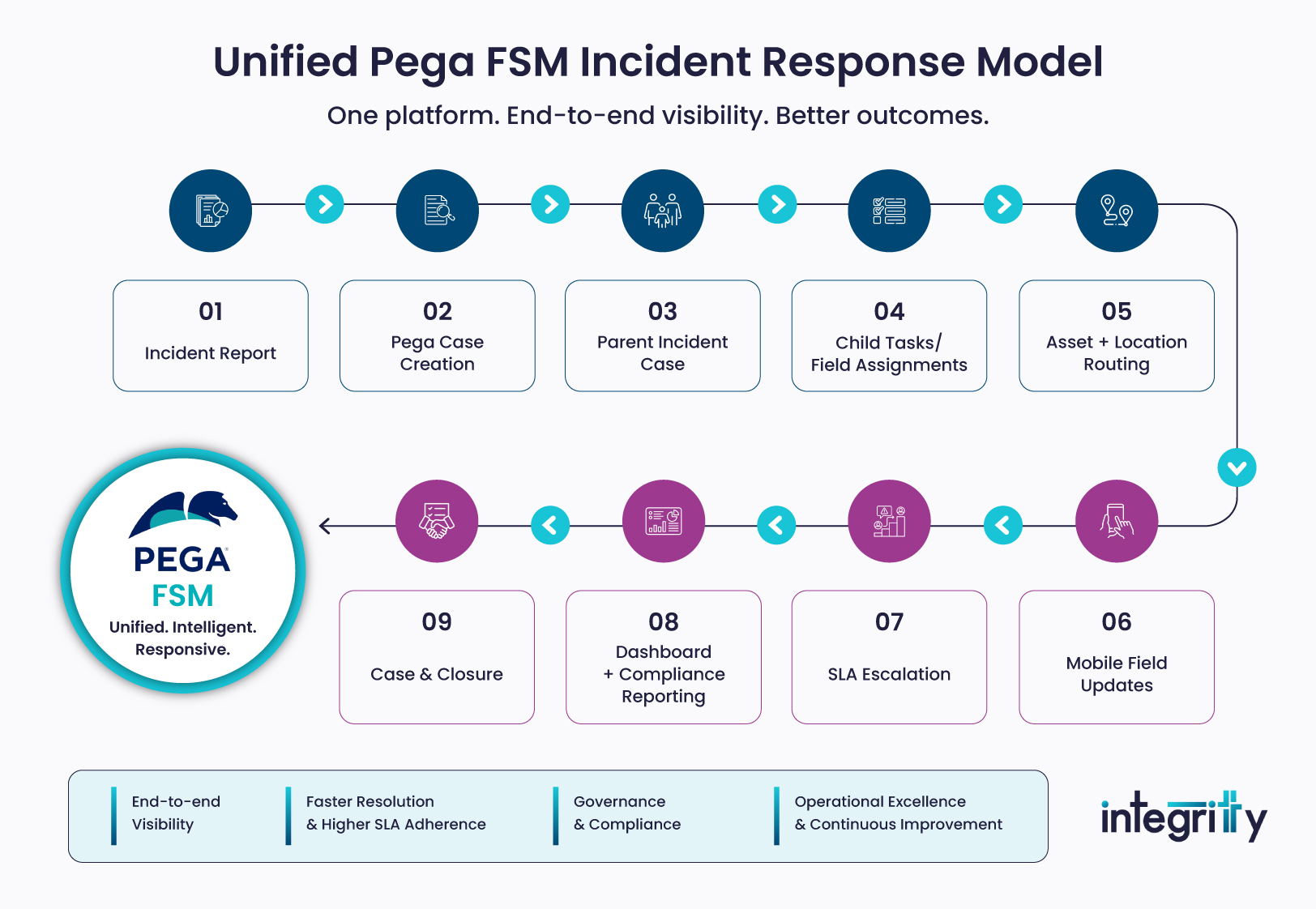
1. Unified Incident Management Platform
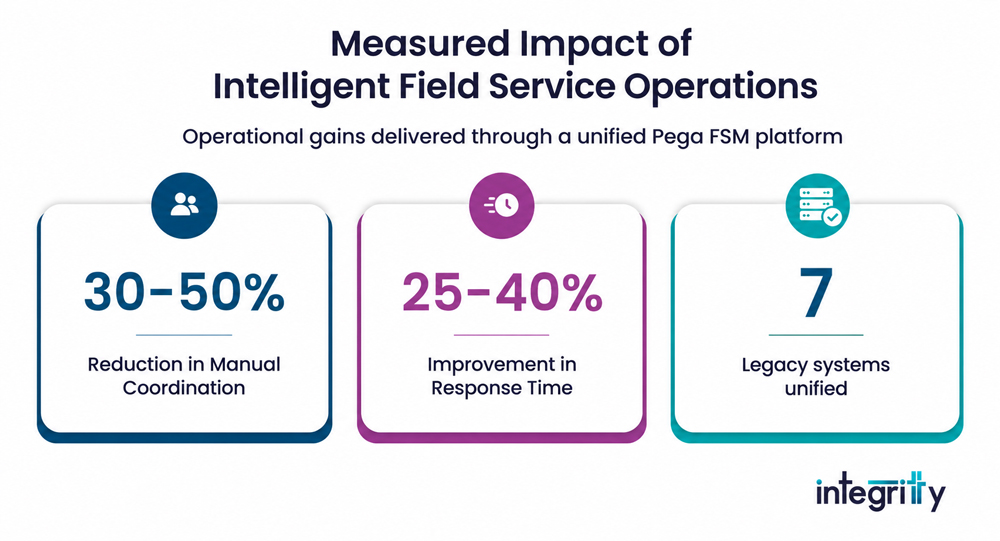
Using a single Pega system, seven legacy systems were unified, enabling:
- Standardized processes to create, manage, and close incidents
- Uniform workflows across all regions
- A centralized case record for real-time updates.
2. Intelligent Case Management (Parent-Child Structure)
An intelligent case management structure was introduced:
- Master incident tickets containing multiple tasks and sub-cases
- Shared incident views for multiple teams
- Centralized case for all real-time rolling updates.
3. Asset-Centric Workflow Automation
Each incident is associated with an asset and GIS-enabled location context:
- Automated routing based on asset type, GIS location, and incident class.
- Use of structured templates instead of free-text manual entries.
- Structured data capture for reporting and compliance.
4. Real-Time Dispatch & Field Coordination
Communication between the service desk and field personnel was improved through:
- Role and craft-specific task assignments.
- Live status updates along with ETA.
- Standard escalation processes for all high-priority incidents.
- GIS-enabled dispatch visibility for assets, field teams, and incident locations.
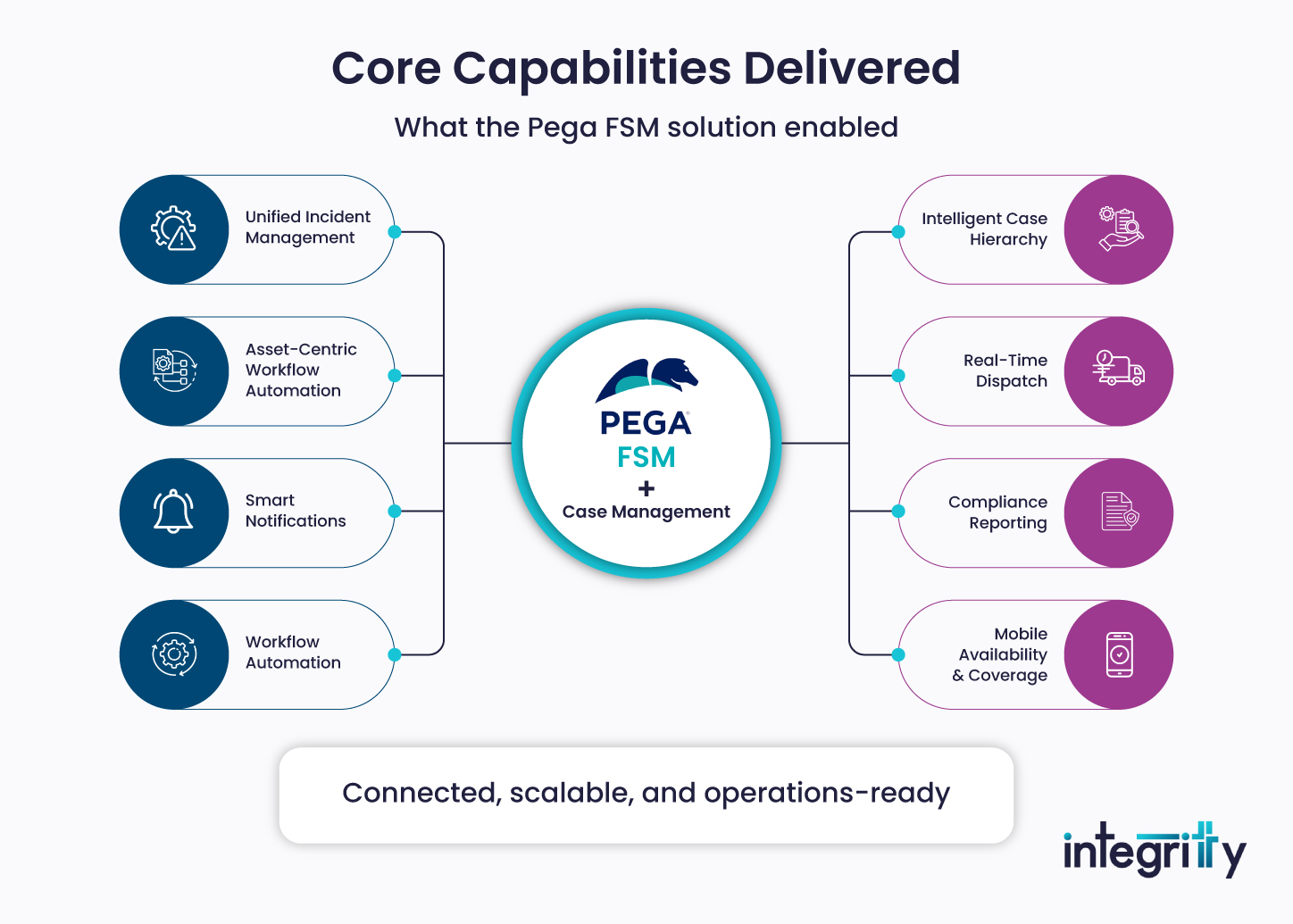
5. Smart Notifications & Subscription Model
To balance visibility with information overload:
- Role- and territory-based subscriptions.
- Open, update, resolve, and close alerts.
- Digests to reduce notification clutter.
6. Compliance & Regulatory Reporting
Audit readiness through built-in compliance:
- Regulatory reporting with required fields.
- Closure codes with structured accountability.
- Actions and updates documented with audit trails.
7. Automation of Important Workflows
Manual processes became entirely automated:
- Permitting and excavation workflows, e.g. “call before you dig”.
- High-risk operational planning workflows.
- Environmental incidents automatically routed based on rules.
8. Availability and Coverage Control
Mobile access enabled:
- “Book on/off” status changes in real time.
- Automated availability-based territory changes.
- Enhanced planning flexibility and continuity for operations
Measurable Business Impact
The transformation delivered measurable operational improvements through intelligent case processing.
1. Operational Efficiency
- Reduced manual coordination was reduced by 30–50%
- Reduced duplication of work
- Faster incident resolution of incidents
2. Improved Visibility
- Real-time, operational intelligence dashboards in all regions with operational intelligence
- Centralized insights for decision-making
- Improved situational awareness
3. Faster Response Times
- Improved response time by 25-40%.
- Reduced escalation lag through automated SLA workflows.
- Improved field coordination.
- Improved field coordination in the field.
4. Regulatory Confidence
- Structured data models support audits.
- Improved compliance reporting.
- Full traceability through the case audit framework.
5. Improved Customer Experience
- Service is restored quickly.
- Improved the operational reliability
- Improved workflow transparency.
Conclusion
Pega FSM, case management orchestration, and workflow automation demonstrate how complex enterprise operations can be optimized through intelligent architecture—without the need to completely replace core systems.
By leveraging this intelligent architecture, we helped the organization transform fragmented processes into a connected Pega system powered by a structured data operating model, real-time decisioning, and low-code BPM.
Ultimately, this transformation provides the organization with a flexible, scalable platform equipped to drive future innovation, including continuous operational improvements, AI-driven insights, and predictive analytics.
Ready for a strategic portfolio audit? Let us identify where fragmentation is slowing you down. Contact our team today.